



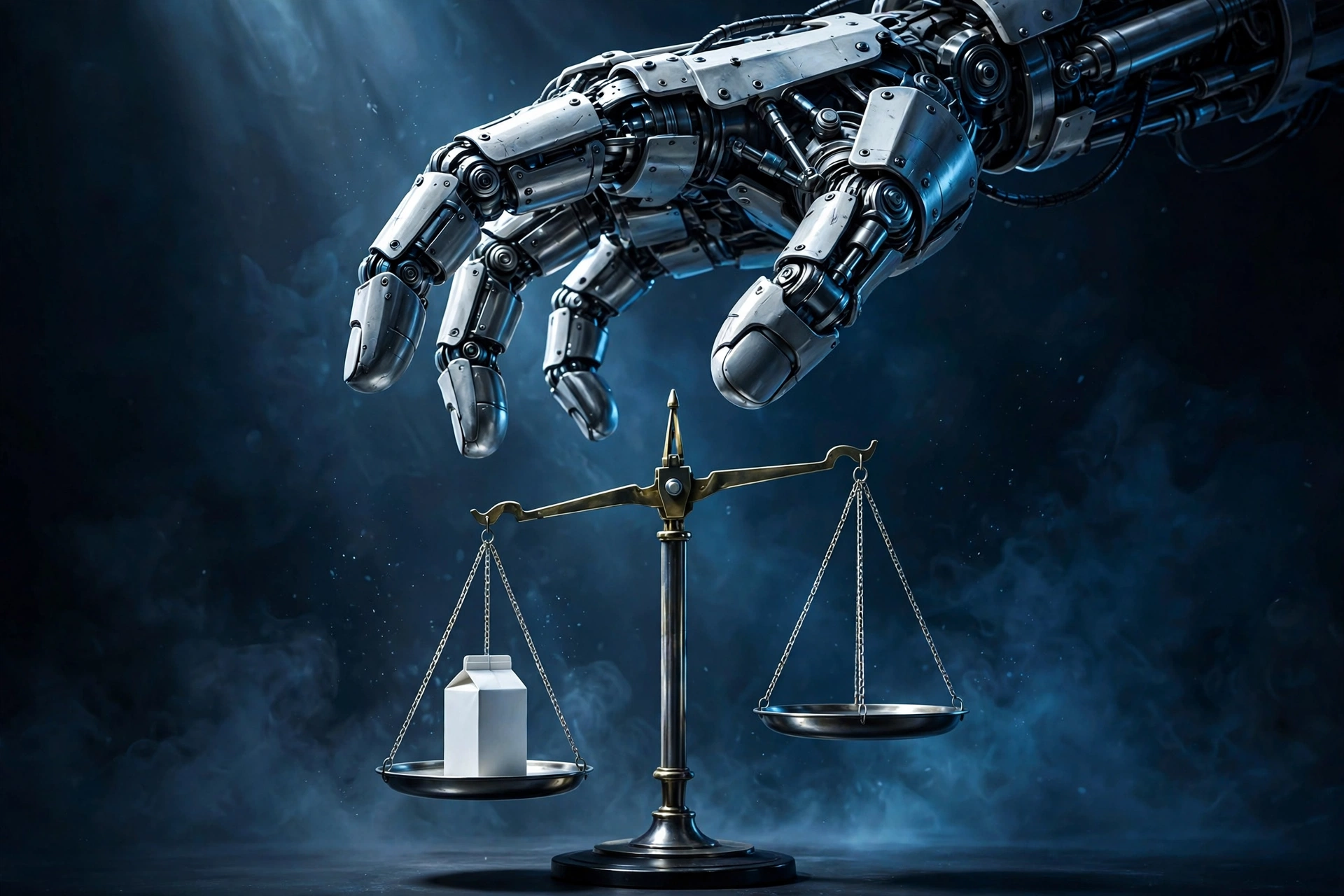
Your washing machine faces more safety regulation than the most powerful AI systems on earth. That is not a critic’s exaggeration — it is the considered view of Brad Smith, the president of Microsoft, who told the BBC that artificial intelligence urgently needs the kind of product-safety rules the world takes for granted everywhere else.
The Milk-Carton Test
“Right now, your washing machine is subject to more safety rules than AI,” Smith said in the BBC’s Big Boss Interview, published October 11. “Every carton of milk that you see in the grocery store is subject to safety rules and inspection.” The comparison is deliberately mundane: if society inspects milk, it can surely inspect algorithms that decide who gets hired, what news billions see, and increasingly, what machines do in the physical world.
What Smith Wants
Smith, who described AI as both a “tool and a weapon,” laid out concrete proposals rather than vague principles, as reported by Cybernews:
- Emergency brakes — “kill switches” that let companies pause or slow AI systems that start behaving dangerously. Microsoft CEO Satya Nadella echoed the call, writing that superintelligence cannot be treated as “a set of nested black boxes.”
- Legal incident reports — a binding obligation to notify victims when their systems are breached by rogue AI agents.
- Independent sign-off — outside evaluators who vet powerful models before release, rather than leaving it to the companies building them.
Smith pointed to the United Kingdom — home to the AI Security Institute — as best placed to lead the creation of global standards.
The Other Side: Self-Regulation
Smith’s position puts one of the most powerful executives in AI directly at odds with the White House. President Trump has said his administration will not “stifle” AI development with guardrails, instead calling for tech companies to police themselves — and has even taken to rebranding AI as “super intelligence,” arguing the word “artificial” makes it sound fake.
The tension comes as AI labs themselves sound alarms: leaders at Anthropic, Google DeepMind and OpenAI have all backed slowing the pace of development, following a string of AI-driven cyberattacks and warnings from researchers about where the technology is heading.
Why Business Leaders Should Care
Whether or not you buy Smith’s framing, the direction of travel matters for every company deploying AI. Voluntary commitments are giving way to enforceable obligations — incident disclosure, pre-deployment evaluation, and demonstrable control over autonomous systems. Firms that build those muscles now, while the rules are still being written, will adapt faster than those waiting to be forced. In the emerging AI economy, accountability is becoming a competitive advantage.
1 Comment
Pingback: Nvidia's Next Big Bet: Inside the Talks to Buy Open-Source AI Lab Reflection AI - Weekly Business Records