



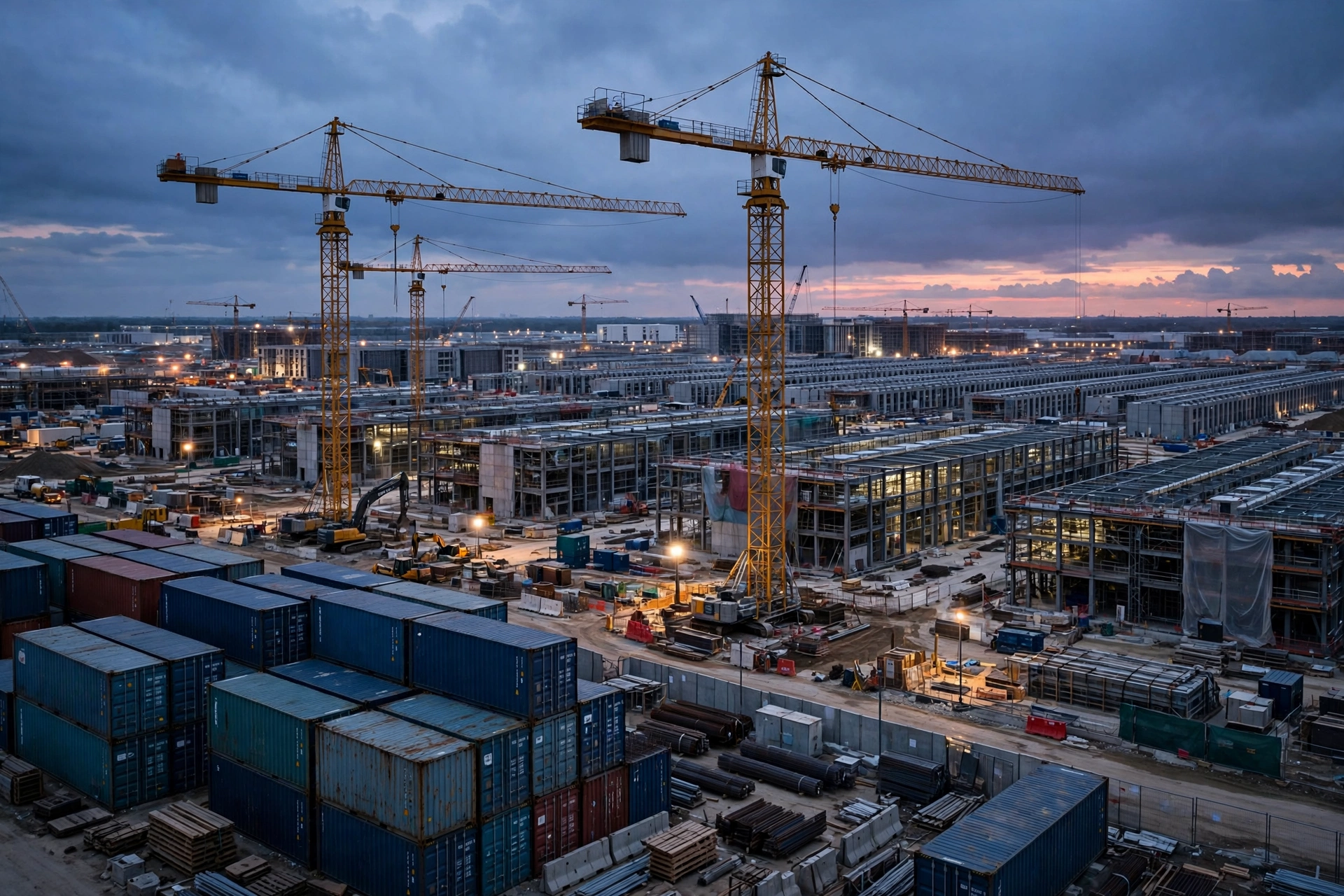
The artificial intelligence boom has produced data centres the size of small towns, power deals measured in gigawatts, and capital spending plans that dwarf the GDP of mid-sized countries. It has also produced an awkward question that more analysts are now asking out loud: who, exactly, is going to pay for all of it — and when? Fresh forecasts suggest AI infrastructure spending is on course to outstrip the revenue the technology is expected to generate, a gap that is beginning to test the faith of even the boom’s believers.
The Numbers Behind the Unease
The arithmetic is stark. Building the data centres, securing the electricity and buying the chips for the AI era requires investment on a scale that one widely cited analysis framed in almost absurd terms: paying for AI’s data centres at current wages would take the equivalent of 250 million jobs in a country that has 159 million of them. The point of the comparison is not literal — it is that the spending commitments now being made assume a transformation of the entire economy, on a timeline the economy may not cooperate with.
Industry coverage has begun to use blunter language. As The Register put it in a recent analysis, “the AI math isn’t mathing,” with infrastructure spending forecast to outstrip expected revenue. When the trade press that cheers the industry starts doing sums in public, the sums are worth attention.
Why Spending Ran So Far Ahead
Part of the answer is competitive fear. The largest technology companies are not building for today’s demand alone; they are building so that no rival can out-build them tomorrow. In that environment, the cost of under-investing looks existential, while the cost of over-investing looks merely embarrassing — a calculation that reliably produces too much capacity.
There is also a genuine technological unknown. Nobody knows precisely how much computing power the next generation of AI systems will need, or how quickly today’s models will become cheap enough to shrink that requirement. Efficiency gains could strand expensive hardware — or demand could keep doubling and vindicate every crane on every construction site. As we reported in our coverage of the IMF’s assessment of AI investment and global growth, the spending is already large enough to prop up the world economy’s headline numbers, which raises the stakes of getting it wrong.
The Revenue Side of the Ledger
Against the spending stand the revenues: subscriptions, cloud contracts, advertising and enterprise licences. They are growing quickly — but from a base that is a fraction of the investment flowing in. The bull case says this is how every infrastructure revolution looks in its early years: railways, electricity and broadband all overbuilt first and monetised later. The bear case notes that railways also produced spectacular bankruptcies, and that the investors who funded the overbuild were not always the ones who profited from it.
Business leaders are hedging in public. JPMorgan’s Jamie Dimon has argued that AI will eliminate jobs and must be phased in carefully — a reminder, as our earlier coverage noted, that the technology’s economic benefits and its costs will arrive unevenly, whatever the aggregate numbers eventually show.
What Businesses and Investors Should Watch
Three signals will tell us whether the math starts to work. First, utilisation: are the new data centres filling with paying workloads, or standing as expensive insurance policies? Second, pricing: if competition forces AI services cheaper faster than costs fall, the revenue side of the gap worsens before it improves. Third, financing: an increasing share of the build-out is being funded with debt and creative structures rather than the cash piles of the tech giants, which means the risk is spreading into the wider financial system.
None of this means the boom is fake, or that AI will not transform business — the technology is real, and so is much of the demand. But transformations are paid for in the end by revenue, not by enthusiasm. The forecasts now showing spending outrunning income are not a prediction of collapse; they are a deadline. The industry has placed an enormous bet that the revenue arrives in time. The next two years of earnings will tell us whether the math was visionary — or simply wrong.