



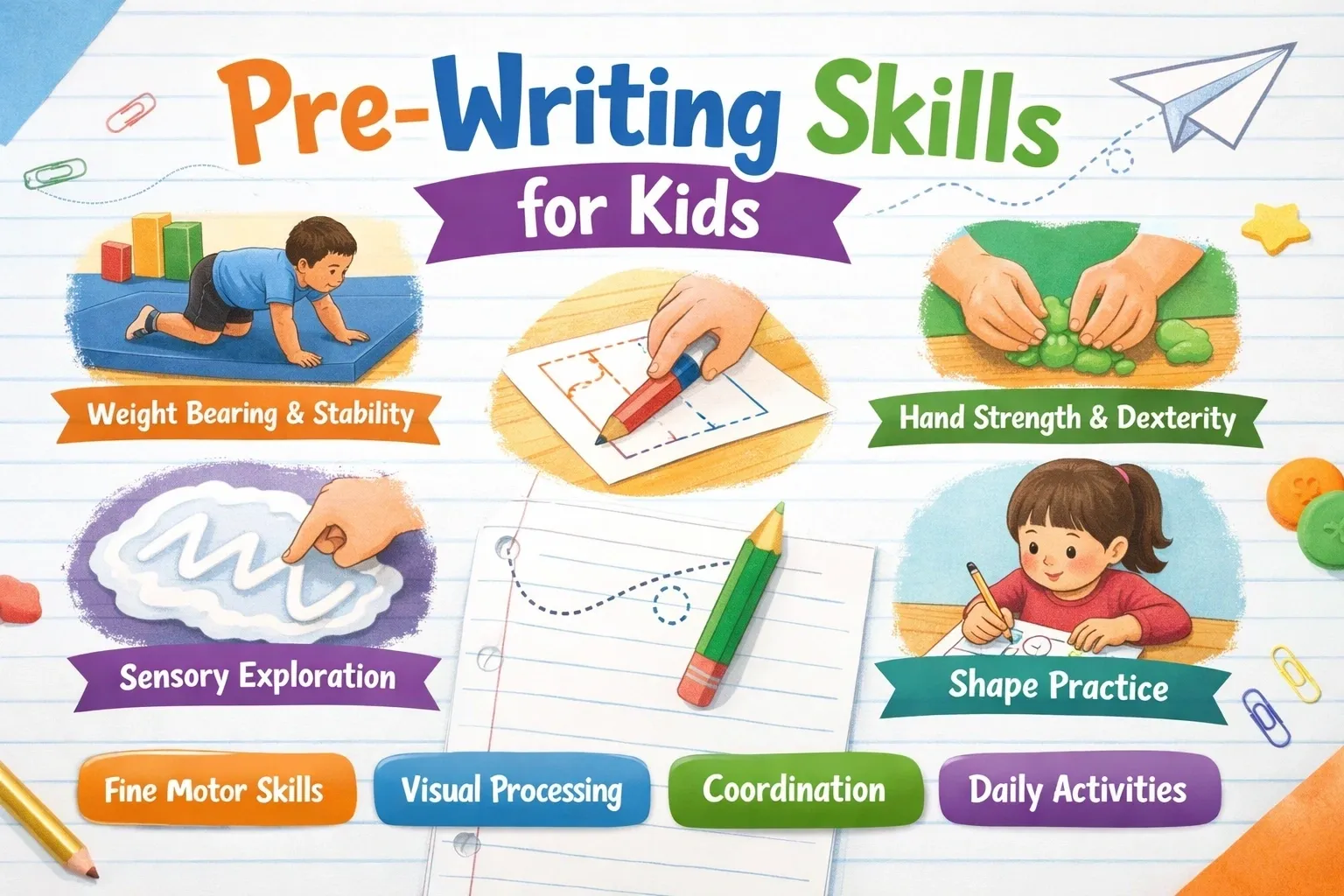
Handwriting is an important part of a child’s school experience. From writing letters and completing classroom activities to drawing pictures and using scissors, children rely on fine motor skills to participate in everyday learning tasks. However, some children find these activities challenging because they have difficulty controlling small hand movements, coordinating their fingers or maintaining a comfortable pencil grip.
These challenges can affect how confidently children complete schoolwork and participate in classroom activities. They may take longer to finish written tasks, become frustrated with handwriting or avoid activities that require precise hand movements.
Occupational therapy can help children develop the practical skills needed for everyday school activities. Through structured activities, individual support and appropriate strategies, occupational therapists work with children to improve fine motor coordination, hand strength, control and functional independence.
Understanding the connection between handwriting, fine motor development and classroom participation can help parents and teachers identify when additional support may be useful.
Understanding Fine Motor Skills in Children
Fine motor skills involve the small movements of the hands, fingers and wrists. Children use these movements to complete tasks that require precision, coordination and control.
These skills develop gradually through everyday activities, play and learning experiences.
Examples of fine motor activities include:
- Holding and controlling a pencil.
- Writing letters and numbers.
- Cutting paper with scissors.
- Drawing and colouring.
- Opening lunch containers.
- Buttoning shirts and fastening zippers.
- Picking up and arranging small objects.
- Using classroom tools and learning materials.
Fine motor development is important because these abilities support children’s independence at school and at home.
Some children develop these skills at a different pace or experience difficulties with particular movements. When these challenges interfere with everyday activities, occupational therapy may help identify suitable strategies and support.
How Occupational Therapy Supports Children’s Handwriting
Handwriting requires several skills to work together. Children need to control their fingers, coordinate hand movements, maintain a suitable pencil grip and organise their writing on a page.
Occupational therapy for children Adelaide handwriting support can help address difficulties associated with handwriting and fine motor development through activities suited to each child’s needs.
An occupational therapist may assess how a child holds a pencil, forms letters, controls pressure and manages written tasks. Based on the assessment, they can develop activities that support the skills required for handwriting.
The aim is not simply to improve handwriting appearance. It is also to help children participate more comfortably and confidently in classroom activities.
1. Developing a Comfortable Pencil Grip
A suitable pencil grip helps children control writing movements and manage classroom tasks.
Some children may hold a pencil too tightly, use an awkward hand position or experience difficulty adjusting their fingers while writing.
Occupational therapists can introduce activities that encourage finger coordination and comfortable pencil control.
Examples may include:
- Picking up small objects using fingers.
- Playing with modelling clay.
- Using tweezers during sorting activities.
- Completing finger-based games.
- Practising drawing and tracing.
- Using age-appropriate writing tools.
The goal is to support functional pencil control rather than expecting every child to use an identical grip.
2. Improving Hand Strength and Finger Control
Hand strength helps children manage activities such as writing, cutting and manipulating classroom materials.
Children who find these tasks difficult may experience hand fatigue or struggle to maintain control during longer activities.
Occupational therapy activities may include squeezing soft balls, using playdough, pinching small objects and completing construction games.
These activities provide opportunities to practise different hand and finger movements in an engaging way.
3. Supporting Hand-Eye Coordination
Hand-eye coordination allows children to use visual information to guide their hand movements.
This skill is important for handwriting because children need to see what they are writing while controlling the movement of their pencil.
Activities that support hand-eye coordination may include:
- Drawing shapes and patterns.
- Connecting dots.
- Completing simple puzzles.
- Building with blocks.
- Copying lines and designs.
- Colouring within defined spaces.
These activities can help children practise controlling their movements while following visual information.
4. Improving Letter Formation and Writing Control
Some children understand letters and numbers but find it difficult to reproduce them accurately on paper.
They may struggle with letter size, spacing, direction or keeping their writing aligned.
Occupational therapists can use structured activities to help children practise the movements involved in forming letters.
Support may include tracing activities, visual guides, large writing movements and gradually progressing towards smaller handwriting tasks.
The activities should match the child’s current abilities and become more challenging as their skills develop.
5. Developing Hand Dominance and Bilateral Coordination
Handwriting involves more than the hand holding the pencil. Children also need to use their other hand to stabilise the paper and support the activity.
This is an example of bilateral coordination, which means using both sides of the body together.
Children use bilateral coordination when cutting paper, opening containers, tying shoelaces and completing craft activities.
Occupational therapy can include activities that encourage both hands to work together effectively.
How Fine Motor Difficulties Can Affect School Activities
Fine motor difficulties can influence several areas of a child’s school experience.
For example, a child who struggles with pencil control may take longer to complete written assignments. Another child may find cutting, colouring or organising classroom materials difficult.
Possible challenges include:
- Slow handwriting speed.
- Difficulty forming letters and numbers.
- Inconsistent letter size and spacing.
- Hand fatigue during writing.
- Difficulty using scissors.
- Trouble manipulating small classroom objects.
- Avoidance of activities involving detailed hand movements.
These difficulties can affect participation and confidence, particularly when children compare their work with classmates.
Recognising these challenges early can help parents and teachers provide suitable support.
Occupational Therapy Activities That Support Fine Motor Development
Occupational therapists often use practical, play-based activities to help children develop hand control and coordination.
The choice of activity depends on the child’s age, abilities and individual goals.
1. Playdough and Modelling Activities
Rolling, squeezing, pinching and shaping playdough encourage children to use different finger and hand movements.
These activities can help develop hand strength and coordination while keeping learning enjoyable.
2. Beading and Threading
Threading beads onto strings requires children to coordinate their fingers and use visual information to guide their movements.
Activities can be adjusted according to the child’s abilities by changing bead sizes or the complexity of the task.
3. Cutting and Pasting
Using child-safe scissors helps children practise hand coordination and controlled movements.
Cutting straight lines, shapes and simple patterns can gradually introduce more challenging tasks.
4. Drawing and Colouring
Drawing encourages children to practise pencil control, visual coordination and controlled hand movements.
Starting with larger shapes and gradually moving towards smaller details can help children build confidence.
5. Building and Construction Games
Playing with blocks, connecting pieces and assembling simple structures encourages children to use both hands together.
These activities can also support problem-solving and visual-motor coordination.
Working with Teachers and Parents
Children benefit when the strategies used during therapy are supported in their everyday environments.
Occupational therapists may work with parents and teachers to identify practical adjustments that make classroom activities more manageable.
Possible strategies include:
- Providing suitable pencil sizes and writing tools.
- Using lined paper or visual writing guides.
- Allowing additional time for written tasks when appropriate.
- Breaking longer activities into smaller steps.
- Providing opportunities for movement and hand-based activities.
- Adjusting seating and desk arrangements.
- Encouraging regular practice without unnecessary pressure.
Communication between parents, teachers and therapists can help ensure that the child’s goals remain consistent across different settings.
When Should Parents Consider Occupational Therapy?
Every child develops at their own pace, and occasional difficulties with handwriting are not necessarily a reason for concern.
However, parents may consider professional advice if a child consistently struggles with everyday activities involving fine motor skills.
Some signs to observe include:
- Persistent difficulty holding or controlling a pencil.
- Handwriting that is difficult to read.
- Frequent complaints of hand discomfort or fatigue.
- Difficulty using scissors or classroom tools.
- Avoiding drawing, colouring or writing activities.
- Struggling with buttons, zippers or other everyday tasks.
An occupational therapist can assess the child’s functional abilities and determine whether additional support may be appropriate.
Helping Children Build Confidence Through Everyday Skills
Handwriting and fine motor skills play an important role in children’s participation at school. When children experience difficulties with pencil control, hand strength or coordination, everyday classroom activities can become more challenging.
Occupational therapy provides opportunities to develop these abilities through practical activities, structured support and strategies that can be used at school and at home.
With appropriate guidance and regular practice, children can work towards improving their handwriting, managing classroom tasks and developing greater independence.
The focus should always remain on the child’s individual needs, abilities and progress rather than comparing their development with others.