



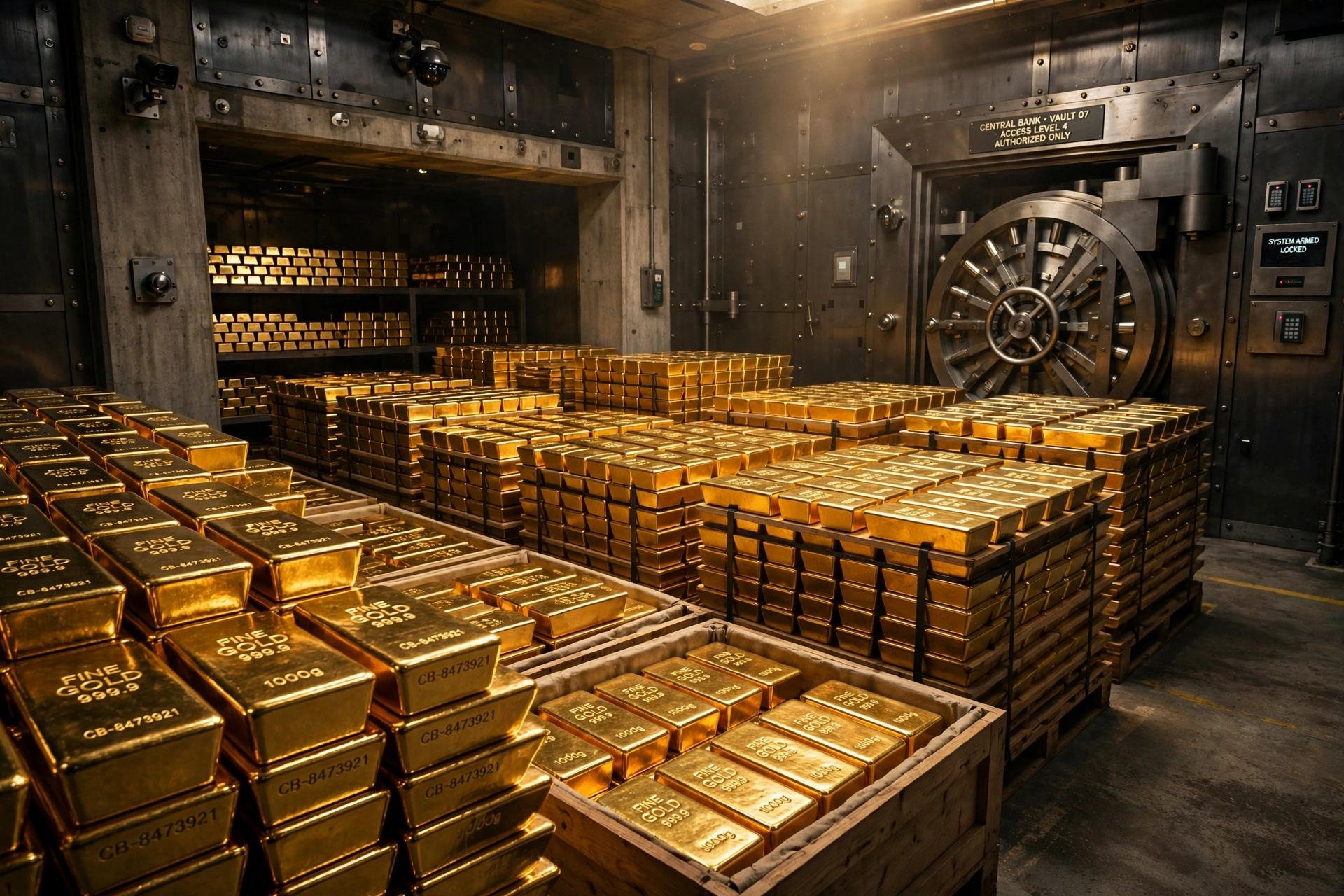
Central banks around the world are continuing to buy gold at a pace not seen in generations, extending a buying spree that has reshaped global reserve management and helped drive bullion prices to record levels.
The purchases, led by emerging-market central banks, reflect a strategic push to diversify reserves away from a single currency and to hold an asset that carries no counterparty risk. For investors and businesses, the trend matters: official-sector demand now provides a powerful floor under the gold market, influencing everything from mining investment to jewellery prices. More coverage is available in our finance section.
Why Reserve Managers Want Gold
Reserve managers cite several motives. Gold is nobody’s liability, cannot be frozen by a foreign government, and has preserved value through wars, inflation spikes and financial crises. Surveys of central bankers published by industry bodies such as the World Gold Council show a growing share expect the gold proportion of global reserves to keep rising over the coming years.
Geopolitics plays a clear role. The freezing of a major central bank’s overseas assets in 2022 demonstrated that reserves held in foreign currencies can become inaccessible in a crisis. Since then, a number of countries have accelerated repatriation and accumulation programmes, quietly moving bullion into domestic vaults.
What It Means for Markets
Analysts note that central bank buying has changed gold’s behaviour. Price dips that once triggered extended corrections are now met by steady official demand, dampening volatility on the downside. At the same time, retail and fund investors in Asia and the West have added their own buying, creating competition for a metal whose mine supply grows only slowly.
The effects ripple outward. Gold miners are reporting strong cash flows and renewed exploration budgets. Refiners and secure-logistics firms are expanding capacity. Meanwhile, higher bullion prices feed into central bank balance sheets in gold-holding countries, strengthening reported reserve positions. Market reporting from Reuters Markets continues to track the interplay between official buying, interest-rate expectations and the dollar.
Risks and Counterarguments
Not every strategist is convinced the trend can run indefinitely. Gold pays no yield, so if real interest rates remain high, the opportunity cost of holding it grows. A sustained easing of geopolitical tension, or a strengthening dollar, could also cool both official and investor demand. Some economists argue that prices now embed optimistic assumptions and warn retail buyers against chasing momentum.
Central bankers themselves rarely discuss individual transactions, and purchases are often revealed only in quarterly data — meaning the market trades partly blind. That opacity can amplify price moves when figures surprise.
The Outlook
For now, the consensus among reserve watchers is that buying will continue at a historically elevated pace, even if the record rate moderates. The structural drivers — diversification, sanctions risk and a more fragmented global economy — are slow-moving forces, and reserve portfolios adjust in years, not weeks.
For businesses exposed to the gold price, from jewellers to electronics manufacturers, the message is to plan for a market in which a large, price-insensitive buyer is a permanent feature. The world’s central banks have become gold’s most important customers, and they are in no hurry to leave.
