



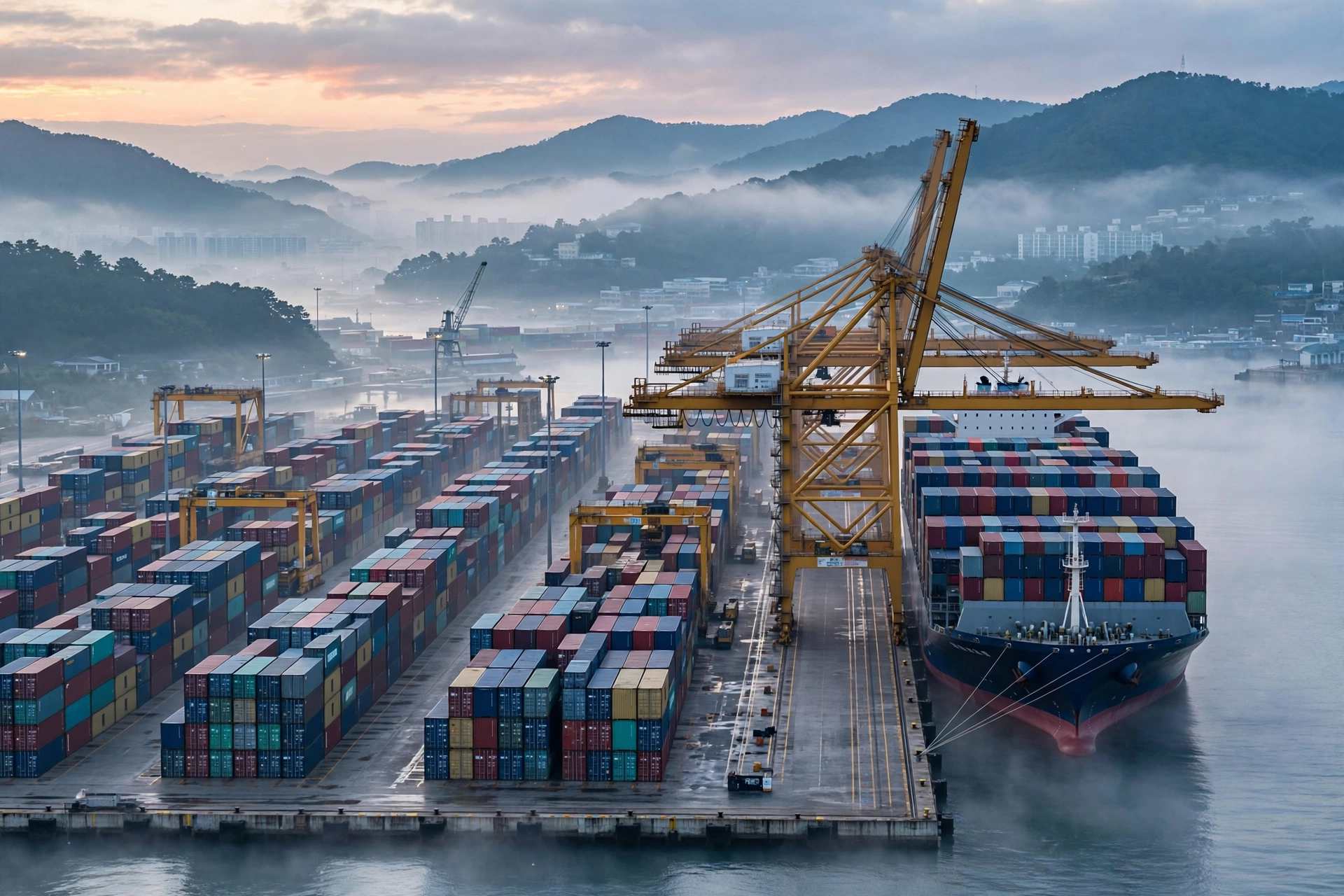
South Korea’s exports more than doubled in the first ten days of October, customs data showed on Monday, as the global semiconductor upcycle powered outbound shipments to a record for the period — with chips alone accounting for nearly half of everything the country sold abroad.
Exports reached $26.1 billion between 1 and 10 October, up 102.0% from a year earlier, according to preliminary figures from the Korea Customs Service reported by The Chosun Daily and Korea JoongAng Daily. Imports rose 65.5% to $22.3 billion, leaving a trade surplus of $3.8 billion.
Chips did the heavy lifting
Semiconductor exports jumped about 171% year on year to roughly $12.2 billion — the highest ever for the first ten days of October — and made up 46.7% of total exports, up 11.9 percentage points from a year earlier. The surge reflects relentless global demand for memory and AI-related chips, which has turned Korea’s two chip giants into the single biggest engine of the country’s trade performance.
The strength was broad, if uneven. Passenger car exports rose 82.7%, petroleum products gained 45.6%, steel products climbed about 49% and wireless communication devices rose 62.6%. Ship exports were the notable laggard, falling 13.4%.
Reading the headline number carefully
The eye-catching 102% figure flatters the underlying trend, because this year’s period contained more working days than last year’s — 5.5 against 3.5, after the timing of holidays differed. Even adjusting for that, however, the performance was exceptional: average daily exports rose 28.5% to a record $4.75 billion, the highest for any comparable period.
By destination, shipments to China surged about 167% to $7.6 billion, exports to the United States rose roughly 160% to $3.7 billion, and Vietnam and the European Union also posted near-doubling gains. China, the US and Vietnam together took 52.3% of all exports.
Why it matters beyond Korea
Korea’s early-month customs data is one of the first hard trade readings of each month for the world economy, and October’s print will be read as another sign that the AI investment boom is still feeding through into real goods trade — a useful counterpoint to the more cautious signals elsewhere, from the cooling pace of Wall Street’s trading boom to energy traders positioning around shipping risks in the Strait of Hormuz.
Imports told a consistent story: crude oil purchases rose 56.2% to $4.3 billion, semiconductor imports — largely equipment and materials for the chip complex — gained 66.7%, and gas imports more than doubled. An export machine running this hot pulls in energy and components at a similar pace.
The question for the rest of the month is whether the daily run-rate holds once the calendar effects wash out. On October’s opening evidence, Korea’s chip-led export boom is not cooling yet.