



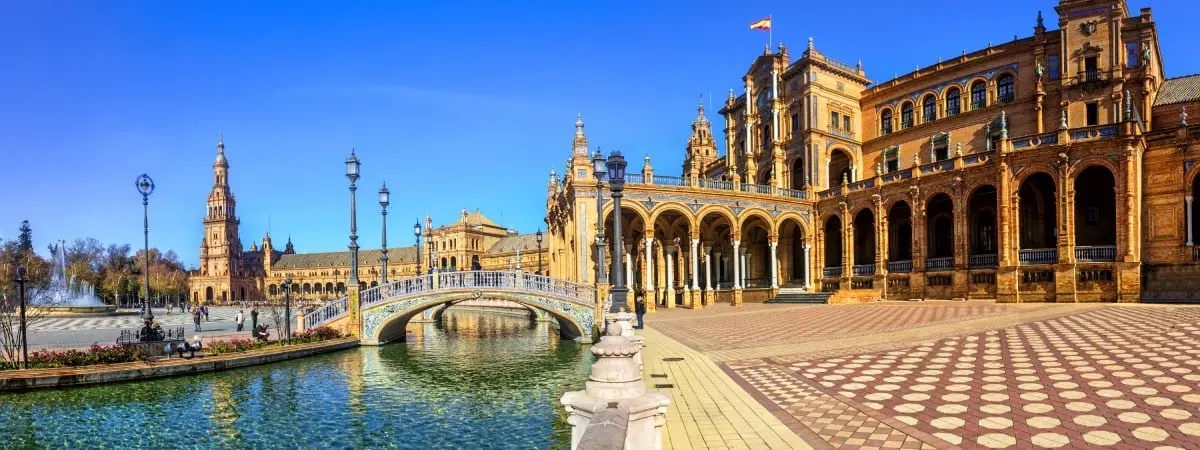
Some cities are best understood through a checklist. Seville is not one of them. Its appeal does not depend only on major landmarks, although it has many of them. What makes Seville unforgettable is the way its beauty unfolds gradually through streets, courtyards, small squares, hidden passages, and the changing light on stone walls. It is a city that rewards movement without urgency. The more one walks, the more the city reveals itself.
That is why Seville works best not as a sequence of famous stops, but as a continuous urban experience in which a visitor may turn from a narrow lane into a shaded plaza, pass a courtyard gate, hear music from a distance, and even notice references as unexpected as adventures beyond wonderland live casino within the wider flow of travel culture and entertainment. The city invites wandering because it does not rely on a single dramatic moment. Its power lies in accumulation, in the way atmosphere builds from one corner to the next until the whole place begins to feel like a world with its own logic.
The Historic Center Creates the First Spell
The historic core of Seville is where many visitors first feel the city’s pull. This area is dense, layered, and shaped by centuries of religious, political, and domestic life. Yet its effect is not only historical. It is sensory and spatial. Streets narrow and open again. Walls reflect heat and light in different ways throughout the day. Balconies, windows, tiled details, and internal patios create a sense that each building has a life beyond what is visible from the street.
This is one reason Seville feels so easy to get lost in. The urban plan does not always aim for clarity. It often favors intimacy. Instead of guiding the visitor in a straight line, it slows them down and forces attention onto detail. In practical terms, this means that wandering itself becomes part of the value of the city. One is not simply moving between sites. One is learning how Seville breathes.
The historic center also shows why beauty in Seville is rarely monumental alone. Even when the city is grand, it remains close to the scale of daily life. The result is an unusual balance between cultural weight and human proportion.
Santa Cruz Is More Than a Beautiful Quarter
No discussion of Seville’s most beautiful corners can ignore Santa Cruz, but it should not be treated only as a picturesque district. Its value lies in how it concentrates many of the city’s main features: narrow streets, shaded courtyards, irregular layouts, and a pattern of movement shaped by heat, privacy, and social history.
At first glance, Santa Cruz may seem like a place designed for wandering without purpose. In fact, its form reflects practical and historical conditions. The compact streets offer shade. The enclosed feeling protects interior life. Small plazas act as pauses in the urban fabric rather than large civic declarations. This structure creates emotional intensity because each turn feels both contained and open to surprise.
What makes Santa Cruz memorable is not simply that it is beautiful. It is that the beauty feels inhabited. The quarter still carries the logic of a lived city, not merely a preserved image.
The Alcázar and Its Gardens Show the Art of Controlled Space
Among Seville’s most important corners, the Alcázar and its gardens stand apart because they reveal another dimension of the city: control, order, and the deliberate shaping of beauty. While the streets outside often feel organic and unpredictable, the palace complex represents design at its most intentional.
Its courtyards, water features, arches, and garden layouts reflect a long tradition in which architecture and landscape were used to regulate climate, movement, and perception. This matters because Seville is a city where heat influences urban life in deep ways. The use of shade, water, enclosure, and transition is not decorative alone. It is structural.
The Alcázar is therefore more than a famous monument. It helps explain how Andalusian urban beauty works. It shows that some of the city’s most powerful spaces were created through careful responses to environment and power, not through excess.
The Riverfront Gives Seville a Different Kind of Beauty
Seville’s beauty is often associated with enclosed streets and internal spaces, but the riverfront offers something else: release. Along the Guadalquivir, the city becomes more open. The view widens. Movement changes pace. The relationship between architecture and sky becomes more visible.
This openness is important because it prevents Seville from feeling too inward. The river introduces distance and horizon into a city otherwise defined by density and enclosure. Walking there, especially toward evening, reveals another side of Seville’s charm. The city no longer feels like a maze. It feels like a stage for reflection, conversation, and pause.
The riverfront also connects beauty with history in a more outward-looking way. It reminds the visitor that Seville was not only an inland cultural center but also a city shaped by trade, empire, and movement beyond Spain.
Hidden Plazas and Patios Carry the City’s Deepest Memory
Some of Seville’s most beautiful corners are not the ones marked first on a map. They are the quiet plazas with orange trees, the residential patios glimpsed through open doors, and the corners where sound softens and time seems to slow. These places matter because they reveal the domestic foundation of the city.
Seville’s urban beauty depends heavily on thresholds. What is visible from the street is often only part of the story. Behind walls there may be tiled courtyards, plants, fountains, or simple internal spaces designed around rest and climate. This layered structure creates a city of partial revelation. One never sees everything at once.
That is one reason visitors want to get lost here. The city rewards patience and curiosity. It teaches that beauty does not always announce itself. Sometimes it waits behind a wall, beyond a gate, or at the end of a lane that looked unremarkable from a distance.
Beauty in Seville Comes From Rhythm, Not Only From Landmarks
A first-time visitor may arrive expecting only famous monuments, but Seville’s deeper attraction comes from rhythm. Morning light in a side street, midday silence in a patio, the sound of footsteps in an old quarter, the transition from heat to evening air by the river — these experiences create attachment more strongly than sightseeing alone.
This rhythm is what makes Seville feel like a city one wants to return to, and more than that, a city one wants to wander without a fixed destination. It gives beauty duration. It turns place into atmosphere.
Conclusion
Seville is a city in which getting lost becomes part of understanding it. Its most beautiful corners are not limited to the major landmarks, though those matter greatly. The deeper impression comes from Santa Cruz, the Alcázar gardens, the riverfront, hidden plazas, quiet patios, and the way the whole city is shaped by shade, enclosure, water, and rhythm.
What makes Seville so powerful is that its beauty is both visible and withheld. It gives enough to admire at first glance, yet always suggests there is more behind the next turn. That sense of partial discovery is exactly why the city stays in memory. Seville does not simply show itself. It invites pursuit.